10.07.2008

Again, no substance from me

But! I did write a new song
Check it?
http://8bitcollective.com/music/ghostbloom/For+Jane/
FLEH!
http://8bitcollective.com/music/ghostbloom/Crush/
I say good day!

A Pictorial Rebuttal to David's Apologia

Greaves and grieving.


And the coup de grace, weaves and weaving.


I would also like to add that cleaves and cleavin' is an interesting case study, as "cleave" can mean both "to stick to" and "to split apart." This paradox is, unfortunately, a representational impossibility, but the following comes close, conceptually speaking.


Q.E.D.

10.06.2008

Epic Pun: A Defense of Leaves n' Leavin'

When the my personal ethos is challenged and ridiculed by someone who simply decides to open up a rhyming dictionary, I must respond. Not only do these pun-sults reveal, as Obama recently said of McCain's new attacks, "a campaign that is running out of ideas," but they also obscure for our readers the meaning of "leaves n' leavin'." I hope this serves as both a defense as well as an explanation.

The main problem with replacing a rhyming word like "thieves" or "sleeves" with "leaves" is that the phrase becomes self-reflexive. Thieves ARE thieving, yes, but does that mean anything? Is that even a pun when it stands alone or is it simply a joke on the far superior "leaves n' leavin?" Does the new statement have anything larger to tell us about the human condition? Well, no, it doesn't.

The beauty of leaves n' leavin' is that it refers to two separate things - objects known as leaves which are synonymous with Fall, and the act of leaving - and unites them to embody nostalgia in its purest form. The phrase can be used as shorthand, as a symbol, in fact, to capture a landscape, an event, or an experience which causes one to stand back in awe and realize the importance of the current moment in the whole scope of one's personal storyline. When you're sharing one last brew with your best bros on the porch you've been sharing for so long, or when you feel the crisp Fall air rush by your face as you walk hand in hand with a new girlfriend or boyfriend, you don't need to write a fucking paragraph to express your feelings at this moment - you can just say or think the phrase "leaves n' leavin'." The pun isn't funny as much as it is convenient. By referring to an object that embodies the autumnal spirit as well as the nostalgia-filled act of saying goodbye while ALSO making a pun, the phrase is full of rich and varied meaning.

As I already mentioned but as you now can see more clearly, other iterations of this phrase don't hold up to scrutiny. Sure, it's funny to rhyme words, but non-sensical phrases already seem to be in abundance in this increasingly irrational post-modern world. Do we need any more? "Sleeves n' Sleevin'" for example. "Sleevin'" isn't a separate concept from "sleeves" and, in this case, it isn't even a word. We could come up with equally absurd phrases if we applied the same logic to other rhymes of "leaves." Here are some:
Sieves n' Sievin'
Cleaves n' Cleavin'
Weaves n' Weavin'
Cheves n' Chevin'
Greaves n' Greavin'
Grieves n' Grievin'
Ask Jeeves n' Jeevin'
(For more rhymes check out this)
None of these rhymes warrant more than a ephemeral chuckle compared to the power of leaves n' leavin'. And for a contributor who recently posted an article challenging the meaninglessness of current hipster culture, I find such "peacock"-displaying tactics rather odd.

So as we always like to ask on Epic Blog: Is this sweet? I've presented my side. I'll let you decide. I'll leave you with my favorite leaves rhyme: Steve's and Stephen

(Thanks to Hot Eatz and his Children of the Pun. No Depression, guys.)

My Bum is on the Swedish

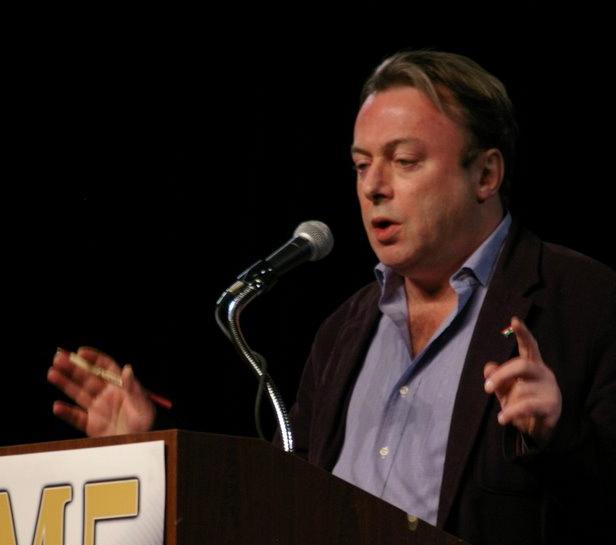
As fellow members of the educated liberal elite, I am sure you have all been ravenously consuming every tasty morsel of news concerning this Nobel Prize hullabaloo, but I feel the need nevertheless to weigh in, being someone who is normally not eager to leap to defense of American letters, but offended still. I mean, the effrontery of these Swedes! I believe the precise quotation, from a committee member, is that our nation doesn't "participate in the big dialogue of literature." First of all, one snippy, dismissive, presumptuous quotation doesn't change the fact that you're all descended from Vikings, who, last time I checked, couldn't even find their way through a 2D jungle without being killed by giant snails. Secondly, if nothing else, this should alert us all to the utter absurdity of the Nobel institution in toto. Why does anyone care about this prize? Why do we let a bunch of bitter, resentful Swedes determine the greatest achiever in fields as imprecise and ridiculous-sounding as "peace"? Moreover, why are we willing to accept the cultural rulings handed down to us from a country that has produced such grotesque cultural abortions as Dolph Lundgren and Ace of Base? Clearly, we must reject the entire Nobel project (I will admit, as an aside, that I suspect this is somehow another attempt by Hans Blix to foil our imperialist ambitions, but I have yet to develop the theory fully. They did, after all, choose that hippie peacenik Al Gore last year...). Anyway, I hope that Delillo, Roth, and our other great writers don't sit up at night worrying about the words from this goober below, who to me resembles the progeny of an unholy, yet undeniably hilarious, union between William F. Buckley and Christopher Hitchens. After all, we Americans never really thought much of the Prize in the first place. Saul Bellow didn't give a shit when he was selected, and most of the other Americans that have won the prize were hacks of an inoffensive sort (I'm looking at you, John Steinbeck). The Nobel committee has notoriously overlooked numerous luminaries in favor of unknown aberrations like this guy, who appear to have been selected for holding comfortably leftist ideologies rather than for any significant literary achievement. If anyone sees this particular Swedish knucklehead, smack him on the head with one of these. Payback's a 1100 page postmodern American bitch, bitch.

The Vice of Vice


I sort of stumbled across this really interesting article about hipster culture which is the cover of Adbusters magazine this month (a publication with hipster connotations itself, sort of perpetuating the duality of all of this). Judging from what I'm seeing online, more and more people are begining to notice this problem; a life of contradictions if there ever was one.


I really strongly urge all of you guys to read it, because it definately hits home and also raises some good points. I know none of us identify ourselves as hipsters, but I know all of us have denied accusations of hipsterdom at some point.


It makes me wonder. The author seems to think that today's hipsters are different from those of the past because there is no movement or message behind the identity, however fake it may be. Is this the case? What does it mean, if our generation is the first group who actively take part in assuming an identity that they also wish to deny? How is the state of the world shaping this identity? Most importantly, if Adbusters is right, what do you think will happen?

10.05.2008

A Son With What You Pound... several, actually

See other posts in the "Evaluate the Mack" series.

Wilt Chamberlain may be known as one of the most prolific sexual beings in recent history, reportedly sleeping with over 20,000 women (1.14 women a day for 48 years), but he's got nothing on this man:

In a recent population study, some scientists found that an inordinate amount of males in Asia (in what amounts to the geographical area of the former Mongol Empire) share the same genetic mutation of their Y chromosome. Mutations of the Y Chromosome allow scientists to track blood lines because they are one of the only parts of the male DNA that can be passed unchanged across generations. The study found that 0.5% of the world's population, some 16 million males, share a genetic mutation that can be traced back to the time of Genghis Kahn; in other words, Genghis Kahn has over 16 million male descendants! Sorry, Abraham, but you only have 13.2 million descendants as of 2007.

If you have the balls to ask yourself, "Is this sweet?" just take a look at that picture and say, "That dude had the hugest mack of all time." Who knows if he slept with as many women as Wilt Chamberlain. A major reason Kahn will always have more sons than Chamberlain is because he passed on his great mack to his sons and grandsons. His grandson, Kubla Khan got mad stately pleasure-dome.

(Thanks to Radiolab, National Geographic, and Samuel Taylor Coleridge.)

Is This Sweet?


This video has captivated me for days.

Those "Empire Strikes Back" costumes. The spelling. The pointing.

If you had to choose, which one would you be? The douchy vocalist? The drummer who holds shit down but is a total bro? Synth dude? I need to find meaning.

10.02.2008

On the Nature of Sweet: A Dialogue II

See other posts in the "Is this sweet?" series.
See other posts in the "On the Nature of Sweet" series (more focused on the philosophy of sweetness).

The late-afternoon sun sparkles on the surface of the ocean. Waves lap against the sides of a party barge (the S.S. Tanked) upon which Demosthenes, king of speeches, and Emile Durkheim, father of Sociology (and definitely not Anthropology), share ideas over a few gin and tonics.

Durkheim: That restaurant was utterly disappointing. In fact, I resolve to never eat Thai again. Their selection of curries was uninspired. And those curtains!
Demosthenes: Say, Emile, do you ever wonder how we came to be engaged in this bizarre dialogue? I mean, putting aside the obvious temporal absurdity of the situation, shouldn’t there be some sort of explanation, at least?
Durkheim: Perhaps. Additionally, I’ve noted that the connection between what we say and our historical personal philosophies is tenuous at best, and, on occasion, bafflingly inconsistent.
Demosthenes: Indeed. Do you sometimes get the feeling that we’re just pawns of some cavalier author? Or that we’re being watched?
Durkheim: I haven’t paid my taxes since 1996, so I always feel that way.
Demosthenes: Oh, that’s actually pretty sweet.
Durkheim: Ah, you’ve just reminded me of the topic at hand: the concept of “Sweet!”
Demosthenes: Right, of course. My previous dialogue on this subject has endured widespread criticism from the liberal media.
Durkheim: Yes, I’m familiar with this exchange. I watched it on PBS. I was inspired to pledge one hundred dollars. Full disclosure, I also received a tote bag.
Demosthenes: My colleague Dr. OKAAAAAYGUYS (Matt) asserts that my discussion “provides us with no coherent criteria with which to judge,” and that I entirely eschew methodology, leaving the reader “adrift in a murky sea of confusion.” Ultimately, his qualms rest on my apparent inability to adequately define a conception of Sweet.
Durkheim: Some might call those, “fighting words.”
Demosthenes: My point, dear Emile, is that I need to address these bold accusations. My larger aim is to advance our understanding of Sweet for the sake of all those with a stake in this emergent field: “The Science of Sweet.” First, I’d like to point out the glaring hypocrisy of Mr. Sherrill’s criticism. After ridiculing my lack of methodology and judgment, he goes on to make equally unsupported claims. “Sweet”s fly from the tip of his pen with reckless abandon, concerning such matters as shadow puppets, Slash, and a gasoline tanker explosion. He even goes so far as to imply the existence of a hierarchy, presuming the ability to rank Sweetness on some undefined scale: “shadow puppets may be definitively sweeter than the sun” [emphasis added]. The admirable vigor of his prose is undercut by a failure to buttress any of his claims. Thus, to extend his metaphor, he denies our readers -- still adrift at sea -- any buoys by which to orient themselves in the tumult of the surf.
Durkheim: Can we stop using the sea metaphor? I’m feeling seasick right now.
Demosthenes: Nonsense – it’s just anomie. Also, that metaphor is the entire reason we’re literally on a boat right now. I know it’s gimmicky, but it only cost fifty dollars for the day.
Durkheim: Well, I think there are more urgent matters on which to take Mr. Sherrill to task. In particular, I believe you have endured unfair criticism as a result of a fundamental misreading of your original dialogue.
Demosthenes: How so?
Durkheim: Mr. Sherrill thoroughly confuses Sweet – the “formidable husk” of a concept -- with “Is this Sweet?” – the analytical question. He attacks your lack of definition, but you never intended to define Sweet in the first place. In fact, Sweetness is such a subjective and intricate concept that an attempt to boorishly shackle it with strict rules or criteria would be downright irresponsible. And so Mr. Sherrill’s demands for methodology and judgment are not only irrelevant, but bordering on naïve. In fact, this very complexity demonstrates the worth of “Is this Sweet?” in our studies. “Is this Sweet?” does not attempt to define Sweetness, nor does it presume an answer. It is a tool that allows for a more nimble, refined approach to the nuance of Sweet.
Demosthenes: A crucial distinction. Ashamedly, I have not conveyed my thoughts with a clarity befitting the great Demosthenes. And in accordance with Mr. Sherrill, my absurd mathematical proof admittedly did not help to illuminate our topic.
Durkheim: Au contraire! If we strip down your exercise to its bare elements, ignoring your unfortunate injection of Facebook and pseudo-math, we see that you attempt something totally Sweet -- unleashing “Is this sweet?” onto itself. Surely it is no less Sweet than Mr. Sherrill’s example of the broken bottle chain-reaction, which I found to be little more than a puzzling amalgamation of utilitarianism and Sweetness.
Demosthenes: I suppose they both agree with the spirit of learning and exploration.
Durkheim: There are some issues that have vexed me since your last dialogue. I must concede to you that Sweetness is a subjective matter; what is Sweet to one person could be decidedly not Sweet for another. But are we confined to a prison of total subjectivity? Could there not be some basic, commonly held criteria to judge that which is Sweet and not Sweet?
Demosthenes: I’m afraid that your position is indefensible, Emile.
Durkheim: Surely we can all agree that explosions are totally Sweet.
Demosthenes: Ah, but what of a hypothetical man being exploded IN the explosion? For him, the value of this Sweetness is greatly diminished.
Durkheim: True. At some level, however, I contend that the exploding man is thinking, “Ok, this sucks – but this is still kind of sweet.” Also, we are not giving enough weight to the type of explosion. For instance, the added Sweetness of a nuclear explosion would lend even further support to my claim.
Demosthenes: Were you that hypothetical man, I think you would recant your position.
Durkheim: I propose a middle-ground. Posing the question “Is this sweet?” impels us to consider the possible interpretations of a phenomenon from multiple perspectives. In other words, that which is not immediately Sweet to mine own sensibilities might be Sweet using another person’s paradigm. In this way, we can escape total subjectivity.
Demosthenes: I have to point out that this approach is fatally bound by the finite nature of human sympathy and experience. Since I am dependent upon myself to generate these alternate viewpoints, I can only accomplish so much.
Durkheim: You are correct, and I am not so reckless as to suggest that by this method we can reach an objective measure of Sweetness. By harnessing the shared experience of our social context, however, this “multi-faceted subjectivism” can provide a functional, collective sense of Sweetness.
Demosthenes: In other words, we could all say, “Oh man, that explosion was totally Sweet!” in chorus.
Durkheim: That’s my goal, yes.
Demosthenes: You know, the more we talk about things that are sweet, the more we risk hurtling into the weighty fields of metaphysics and aesthetics.
Durkheim: Until a philosopher writes the words, “Man, that was totally sweet,” we’ll always have our niche.

5-minute purple robot

Whammo

Also, guys; you neglect one fundamental element of the "is this sweet" dialogue:

Robots are always sweet.

Simple math. Robots = always sweet.


10.01.2008

Is This Sweet?: Case Study #1

See other posts in the "Is this sweet?" series.

Who is he?: T. Boone Pickens
What is he?
: 117th wealthiest person in US, HUGE oil tycoon, chairs hedge fund for British Petroleum, knows everything about energy and tells it to you straight.
Where is he?: United States, some huge mansion on a to scale oil rig replica
Why is he?: He cares about YOU! He sees that we are in the midst of an energy crisis and he's providing America with a non-partisan, no bullshit energy plan that causes some to cry "drill baby drill!!!" and others to sigh and say "shit... ok, fine. you can drill...maybe... oh oh fine, yeah you're right..."

Is T. Boone Pickens sweet? Let's take a closer look.

"Yes, he is sweet."
1. Watch this PickensPlan video
How
straight was that talk? He didn't hug any flora, didn't kiss any fauna. T. Boone is about solutions, not saying "No!" Suck on that Apple using-Prius driving-Starbucks drinking-non-meatatarian-commie-enviromentalists who are just as dependent on oil as every other American! How do you plan on driving to Trader Joe's if gas costs $10/gal?
2. He's
non-partisan. This isn't about Obama or McCain. This is about America. Who better than a multi-billion dollar captialist to look after all us little people? Some might even say he's post-partisan. Country First.
3. One word: BooneCam


"No, he is not sweet."
1. Lou Dobbs thinks he's sweet. (For those new to the concept of "Is this sweet?" the proof of this statement is in the transitive property of sweetness, or in this case "not sweetness." Lou Dobbs is not sweet. Lou Dobbs thinks T. Boone Pickens is sweet, therefore T. Boone is not sweet. It's not an exact science but it works in this case.)
2. The Swift Boat Challenge. His affiliation with and outright support of this atrocious ad campaign in the 2004 election that arguably cost Kerry (ok, he's not that sweet) the presidency and ensured four more years of Bush calls into question his non-partisan/post-partisan claims.
3. Natural gas isn't as sweet as oil.

So is T. Boone Pickens sweet???
After reviewing the evidence, I have to say yes, he is sweet. His motives may be questionable, his affiliations may make you queasy, and the Republicans using him as justification to stick a drill in every National Park and kill every fish, caribou, and polar bear in the process, making Thom Yorke lose sleep and thus putting off the next live Radiohead webcast for a few days... all these things may make you question his sweetness. BUT C'MON! His name is fucking T. Boone Pickens, he's made barrels and barrels of money since the 1970s off oil, and every Dad in America thinks he rules. Suck it up and get on board the Pickens train to energy independence.

  © Blogger template Newspaper by Ourblogtemplates.com 2008

Back to TOP